Patient Education
Teeth in a Day: A Decision Worth Making Before You Lose Your Teeth
Most people don't think about "Teeth in a Day" until they're already down to a handful of failing teeth, sitting in a chair, being told there isn't much left worth saving. By then, it's still a good option. It's just no longer the best version of that option — and that difference is worth understanding well before you're the one in that chair.
What "Teeth in a Day" Actually Means
The clinical name for this is All-on-4 or All-on-6 — collectively "All-on-X" — and the idea is exactly what it sounds like. On a single day, failing teeth are removed, a small number of implants (typically four to six, depending on your bone and your bite) are placed in the jaw, and a full arch of fixed, temporary teeth is attached to them the same day. You don't leave with no teeth, and you don't leave with a removable denture. You leave with a fixed set of teeth on implants.
That provisional set is worn while the implants fuse with the bone over the following months. Once that healing is complete, it's replaced with the final, definitive prosthesis — built with more precision than is possible on day one, when the priority is protecting the healing implants rather than perfecting the final bite and aesthetics.
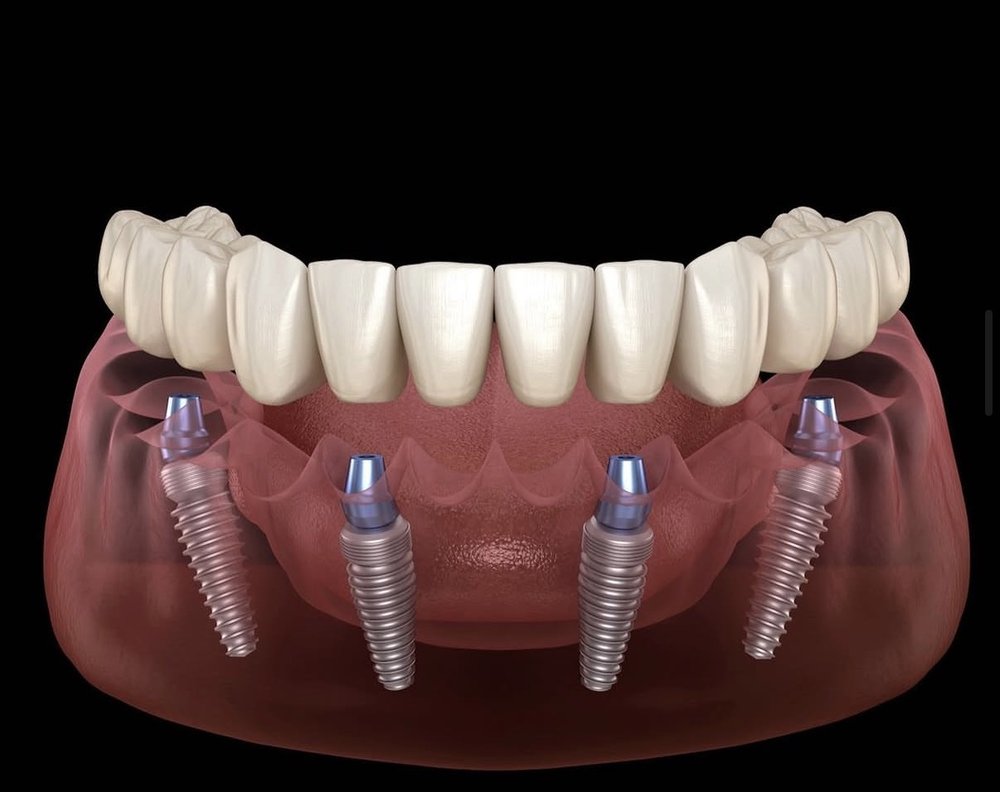
A full arch of fixed teeth supported by just four implants — the basic idea behind All-on-4 / All-on-X.
A real case — before and after
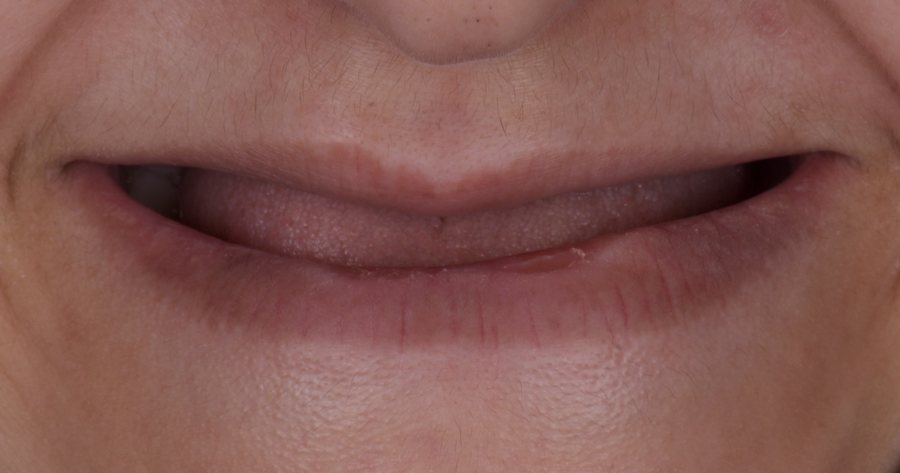
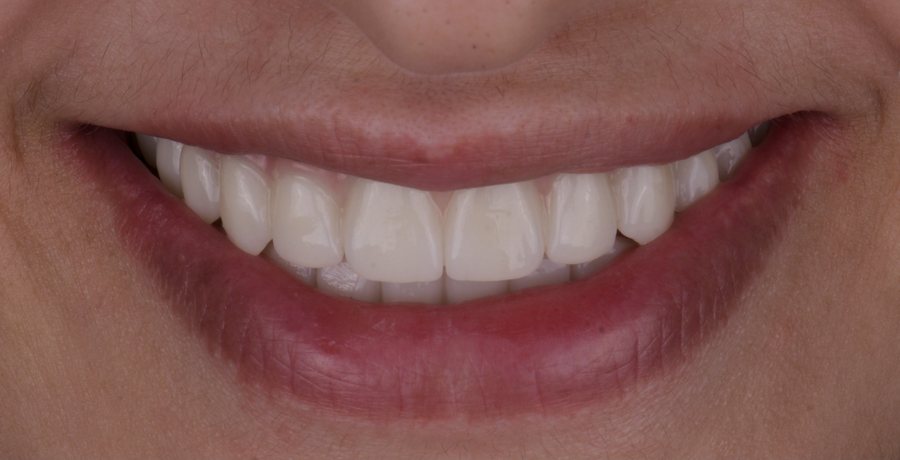
Same patient, before and after — from no smile to show, to a fixed, natural-looking result.
The fixed prosthesis itself
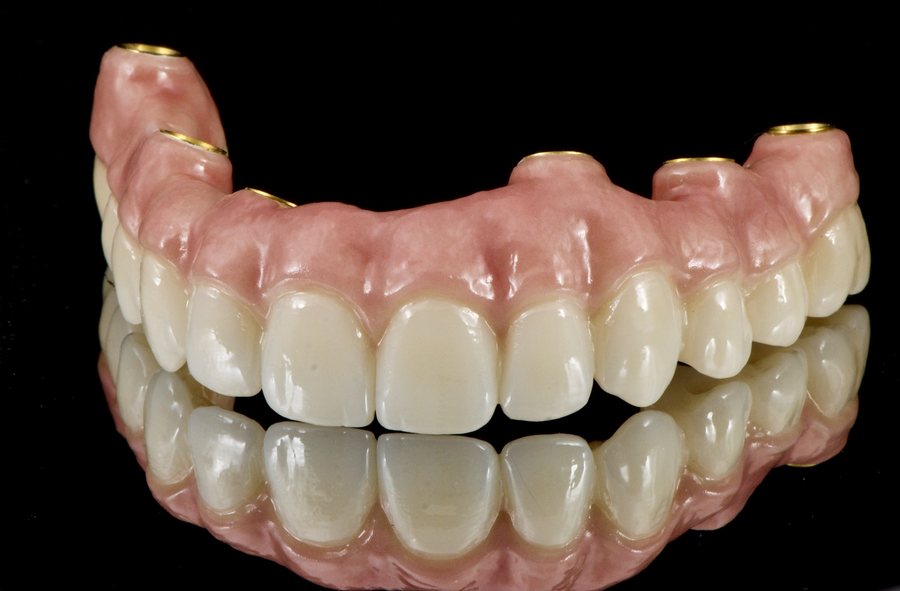
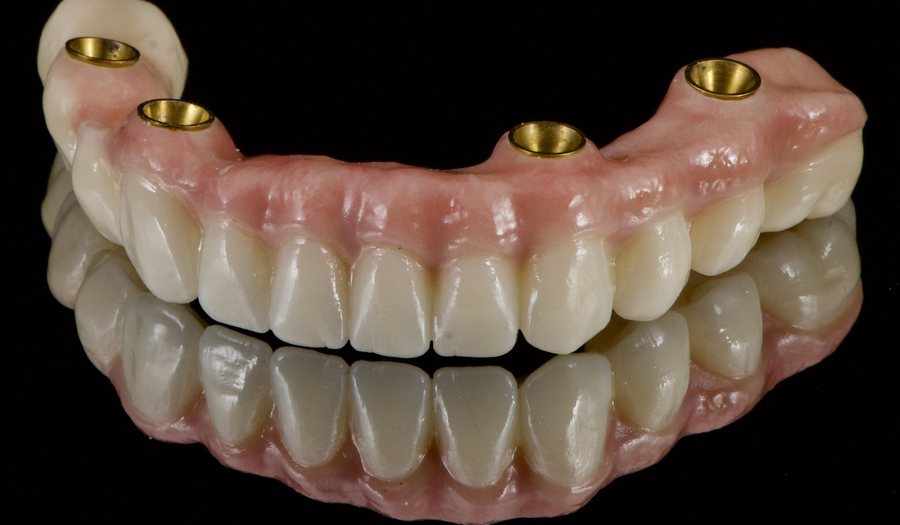
The fixed bridge itself, off the mouth — the gold channels on the underside are where it screws directly onto the implants.
Why This Is Fundamentally a "Before" Decision
Here's what I want every patient with failing teeth to actually understand: the best candidate for this treatment isn't someone who has already lost their teeth. It's someone who still has them — teeth with a poor long-term prognosis from advanced gum disease, repeated root canal failures, or decay that's beyond saving — but who still has good jawbone, good general health, and time to plan properly.
Every month that a failing tooth stays in a state of chronic infection, or every month after a tooth is eventually lost without a plan for what comes next, the jawbone underneath begins to resorb. Less bone means fewer implant options, more complex surgery, sometimes bone grafting before implants can even be considered, and a less predictable outcome. Waiting doesn't make this decision safer. It usually makes it harder.
What Waiting Usually Means: Removable Dentures
If a patient loses their remaining teeth without a plan in place, the default fallback is almost always a removable denture. I want to be fair to dentures here — for the right patient, at the right stage of life, they're a legitimate and reasonable option. But for someone who still has the bone and health to be a good implant candidate, choosing a removable denture by default, simply because no one discussed the alternative in time, is a real loss of quality of life that didn't need to happen.
- Removable dentures rest on the gum and shift, click, or loosen during eating and speaking, especially over time as the underlying bone continues to shrink
- They typically restrict which foods feel comfortable to eat, which affects nutrition as much as enjoyment
- They come out at night and go into a cup — a detail that sounds minor until it's your own reality
- Bone loss actually accelerates under a denture, because nothing is stimulating the jawbone the way natural tooth roots, or implants, do
None of that is a moral failing on the patient's part. It's usually a planning gap — a conversation that should have happened months or years earlier, before the teeth were already gone.
The Part That Isn't Just Clinical
I don't think this decision should be framed purely in terms of bone density and implant survival rates, even though those numbers matter. Fixed teeth versus removable teeth is also a question of how you move through your day — whether you hesitate before laughing, whether you avoid certain foods in front of other people, whether you feel like yourself. Patients rarely use clinical language to describe what changes for them. They use words like comfort, confidence, and dignity. That's not an exaggeration. It's what I actually hear in consultations.
What to Actually Discuss With Your Dentist
If you have teeth that a dentist has described as having a poor long-term prognosis, this is worth a dedicated conversation — not a rushed mention at the end of a routine visit. Worth asking directly:
- Realistically, how much longer can my current teeth be expected to function, and what happens as they continue to fail?
- Am I currently a strong candidate for All-on-4 or All-on-6, based on my bone and health — and how might that change if I wait a year or two?
- What does the timeline actually look like, from the day of extraction and implant placement to the final prosthesis?
- What's the honest difference in outcome, comfort, and longevity between doing this now versus waiting until the teeth are lost?
A dentist who takes this seriously will walk through your actual bone volume, your health history, and a real timeline — not just a sales pitch for same-day teeth.
This is one of the more significant investments in dentistry, both financially and in terms of the procedure itself, and it deserves to be treated that way — planned while you have options, not decided under pressure once you don't. If you have teeth you already suspect won't last, that conversation is worth having now, while you're still the one with the most choices on the table.